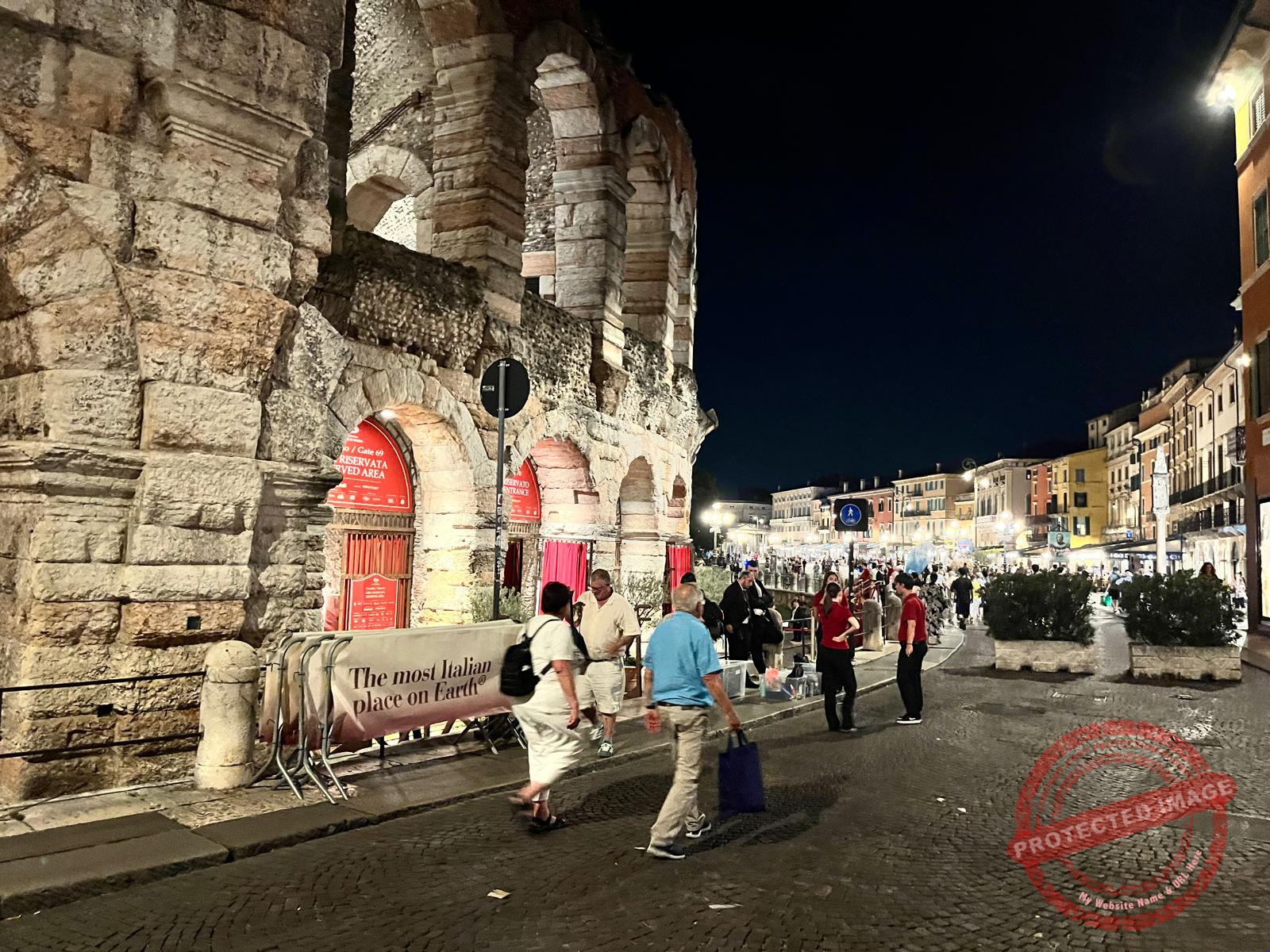
Yesterday, Sam and I journeyed west one hour from Vicenza, Italy, to visit a 2000-year-old sleeping giant who awakes on Summer evenings to tell a story.
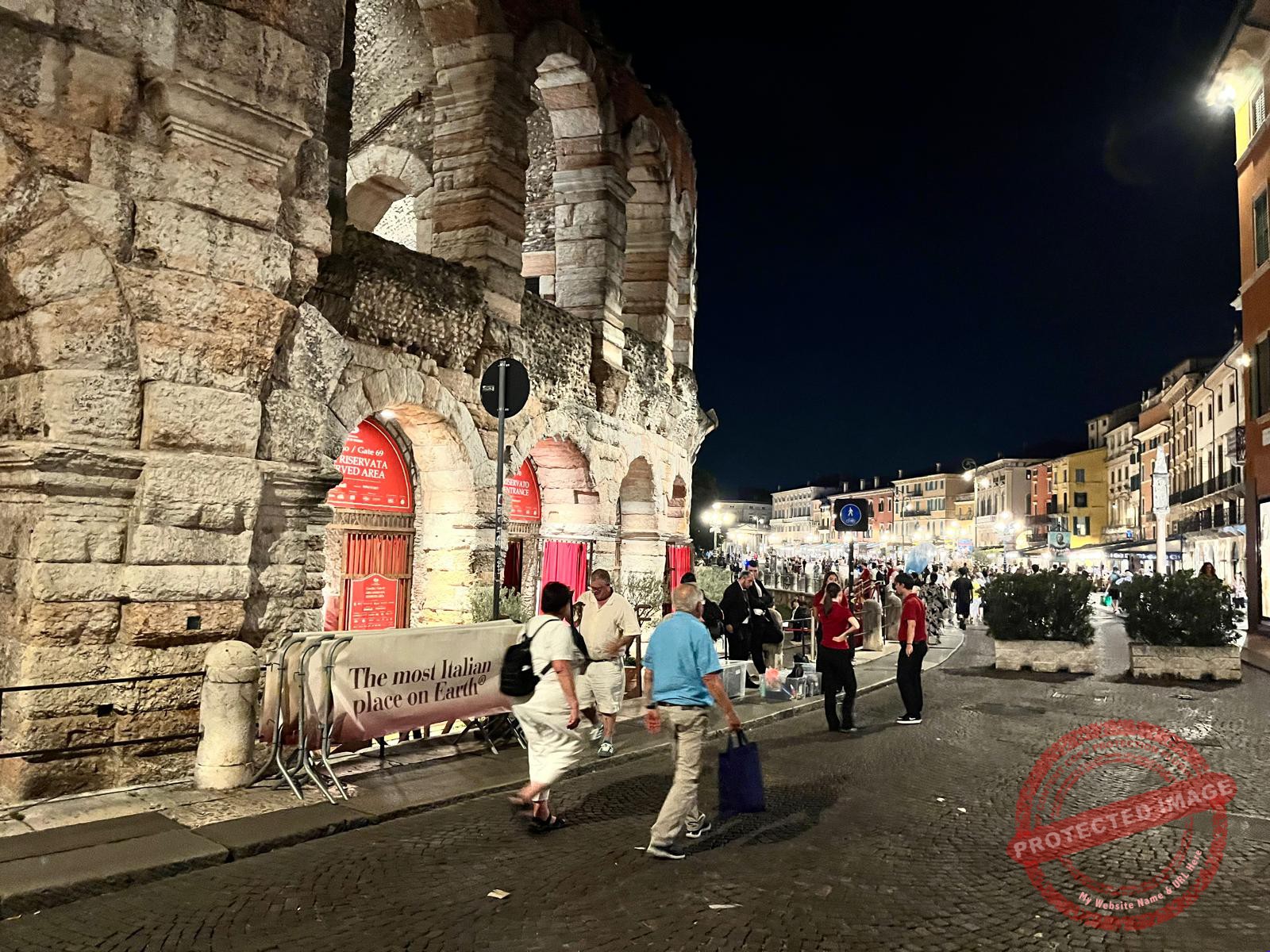
The giant? The Verona Arena–the largest open-air theatre IN THE WORLD. It also happens to host the largest (and oldest) international opera festival in the world. Slap on an UNESCO World Heritage Site designation, and you’ve got an experience that can’t be substituted. The Arena is located just across from Verona’s largest public square, Piazza Bra. It’s pretty hard to miss!
The story? La Boheme by Giacomo Puccini, which first showed in 1896 at the Teatro Regio in Turin, Italy.
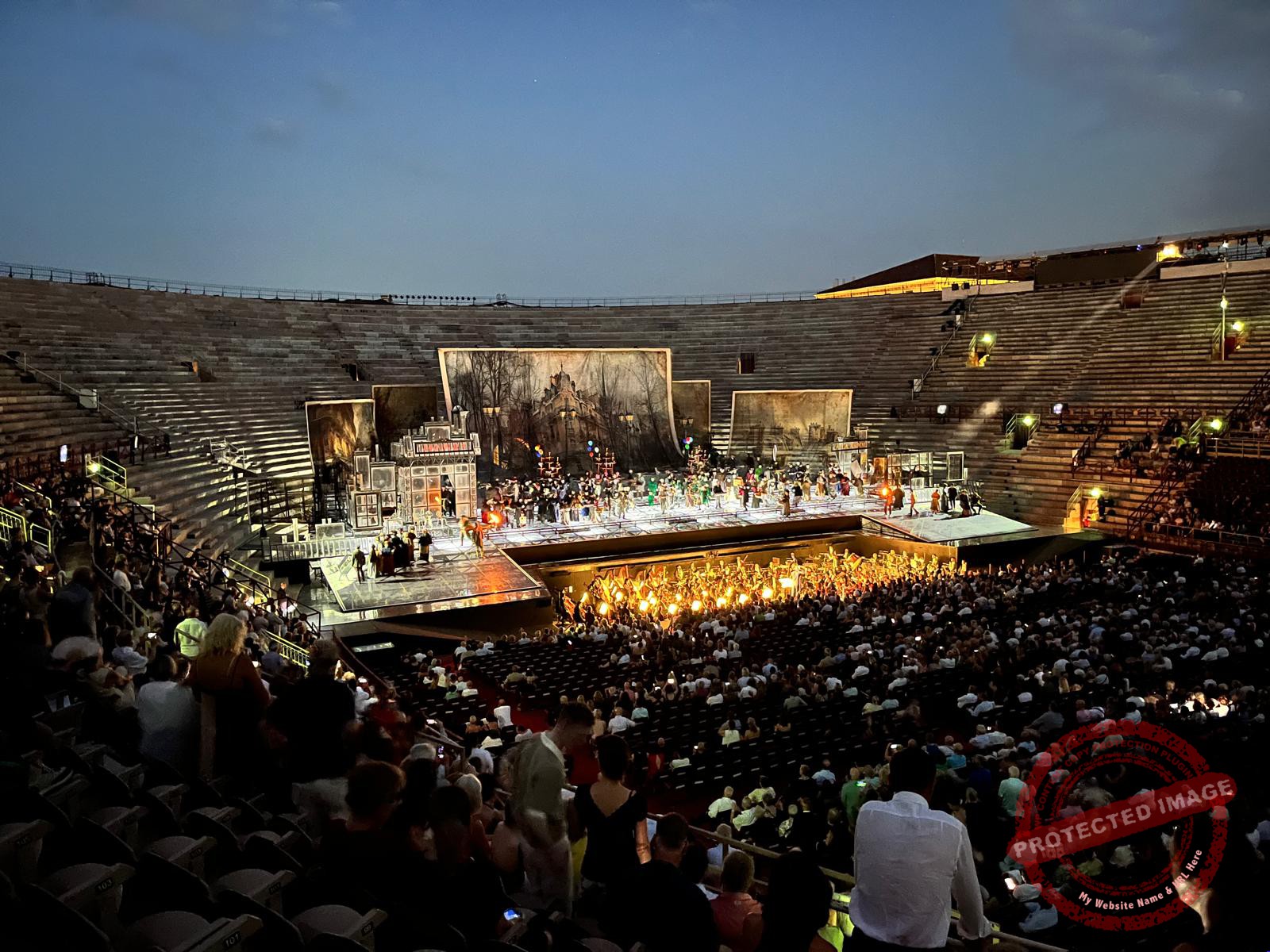
The opera festival? This year, the Verona International Opera Festival will put on 50 live shows from June 12 to September 12, 2026, ranging from Aida to La Traviata to ballet to Vivaldi’s Four Season’s Orchestral concert.
Older than Rome’s Colosseum by around 50 years, Verona’s Arena (built around 30 AD/CE) isn’t just remarkably preserved, it’s a monument of hard work, resilience and reinvention. After all, it’s hosted everything from gladiator show-downs and horse races and jousts and exotic animal exhibitions from nearly 2000 years ago to major modern events such as the 2026 Winter Olympics Closing Ceremony. It survived two world wars and a doozy of an earthquake in 1117. It endured Napoleon. And now, every year, it invites up to 22,000 spectators on summer evenings for its opera festival.
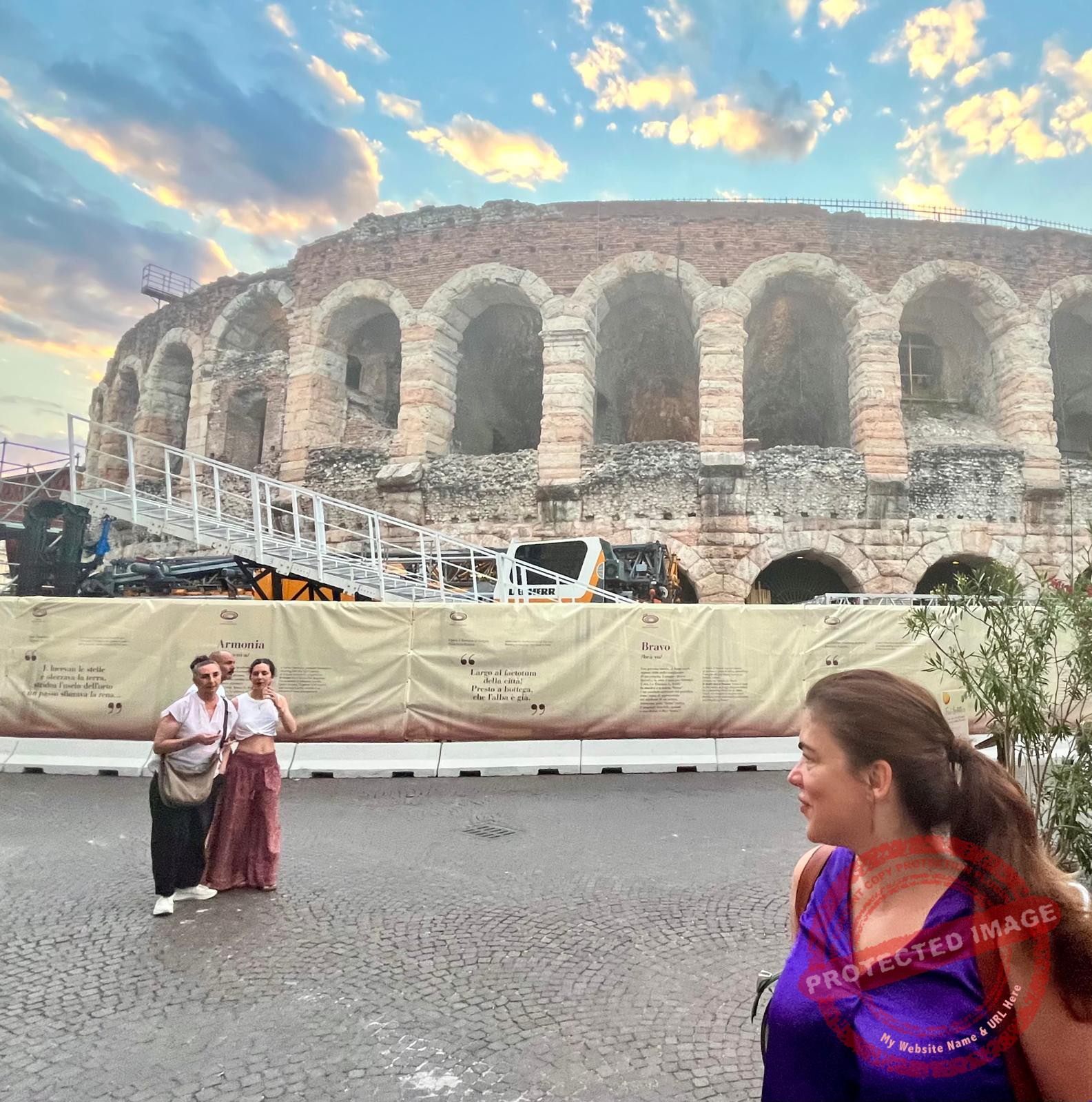
And when you combine that kind of history with that many people inside a ring of stones baked for hours in 90-degree summer heat, you get an experience you will never forget … assuming you remain conscious.
Lucky for us, last night’s show wasn’t a full house, but the temps were still in the upper 80’s when the commencement gong set things off at 9:15 at night. La Boheme lasted until midnight, with two twenty-minute intermissions spaced between acts. Just enough time for a bathroom break and a cold drink. And while a three-hour show might sound like a long time, it’s actually a short production when compared to Carmen, which we saw back 2023 (on an equally sweltering evening) and lasted until after one a.m.!
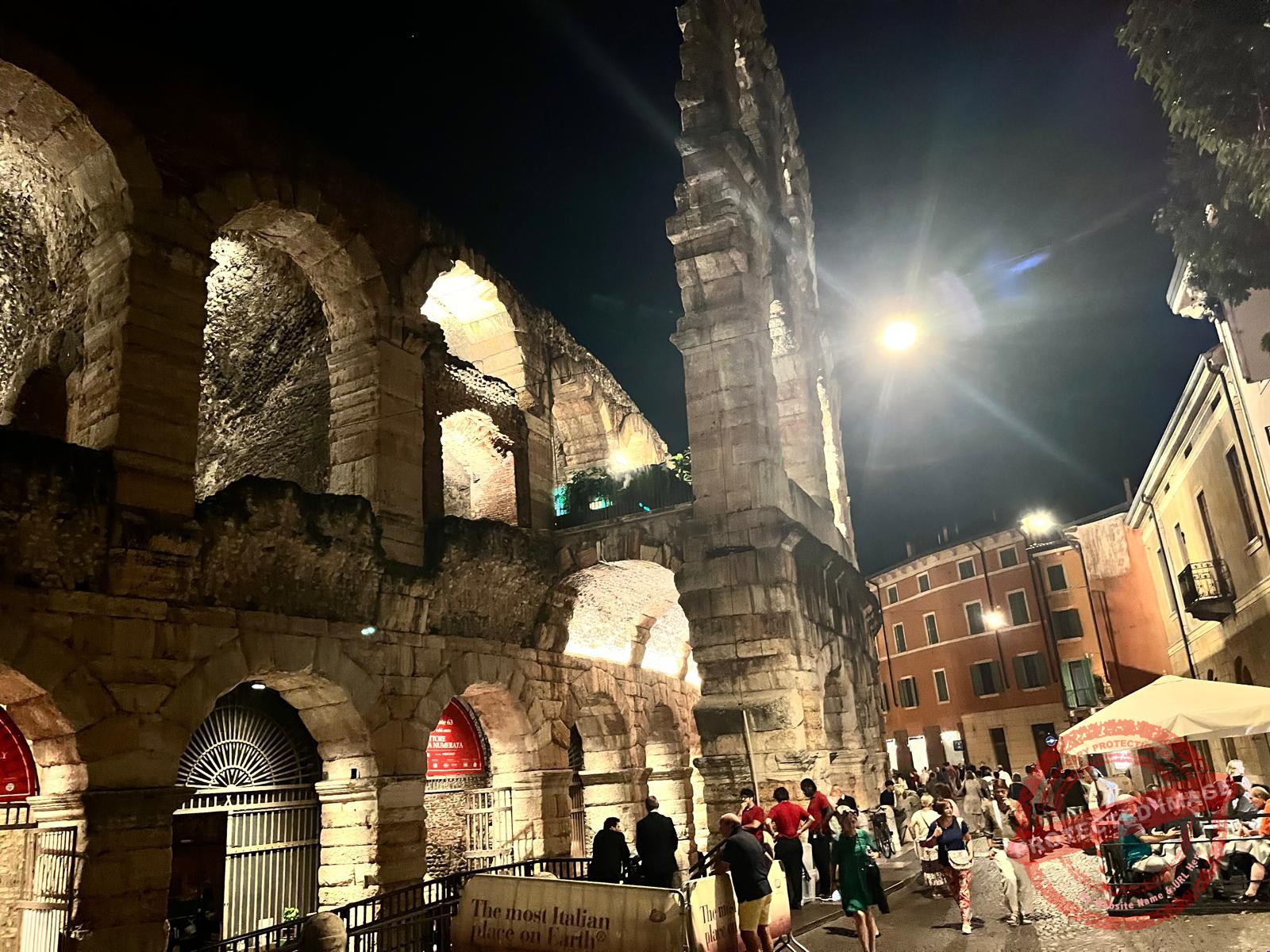
As this is our second time going, I’ll list some pointers below that will hopefully be useful for first-timers. Nothing like benefiting from those who’ve learned the hard way! But in any case, seeing a show at the Verona Arena is truly an immersive adventure. If you can do it, GO! And bring a fan and water!
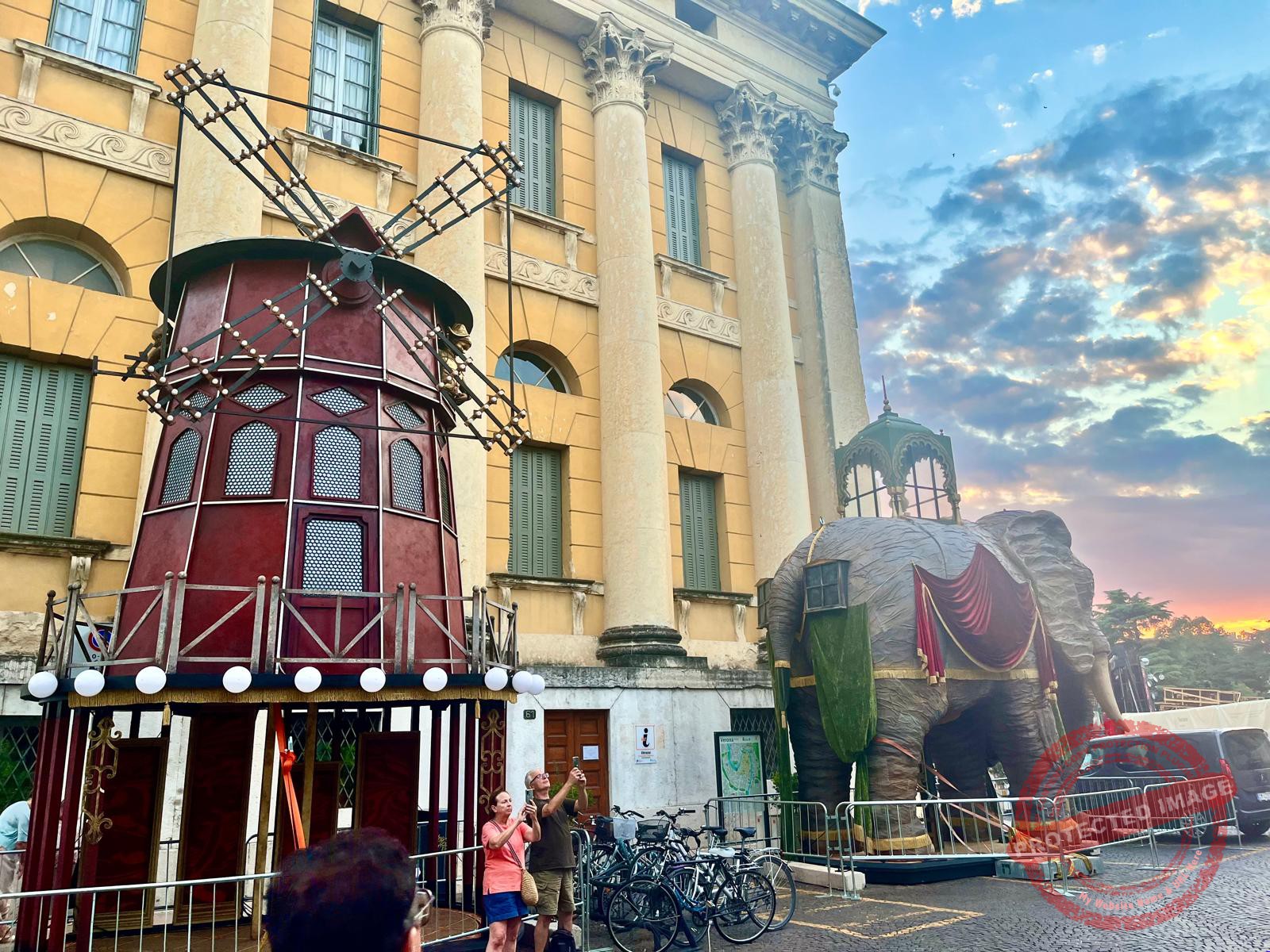
TIPS for seeing a show at the Verona Arena during the Verona International Opera Festival:
TIP #1-WATER: Bring a small bottle of water, but make sure it’s a store-bought water bottle (half liter or smaller) because personal water flasks and other containers are not allowed inside the arena. You will, in fact, witness a forlorn box of metal and glass and plastic flasks just beside the security entrance and be grateful for your store-bought little bottle of liquid life.
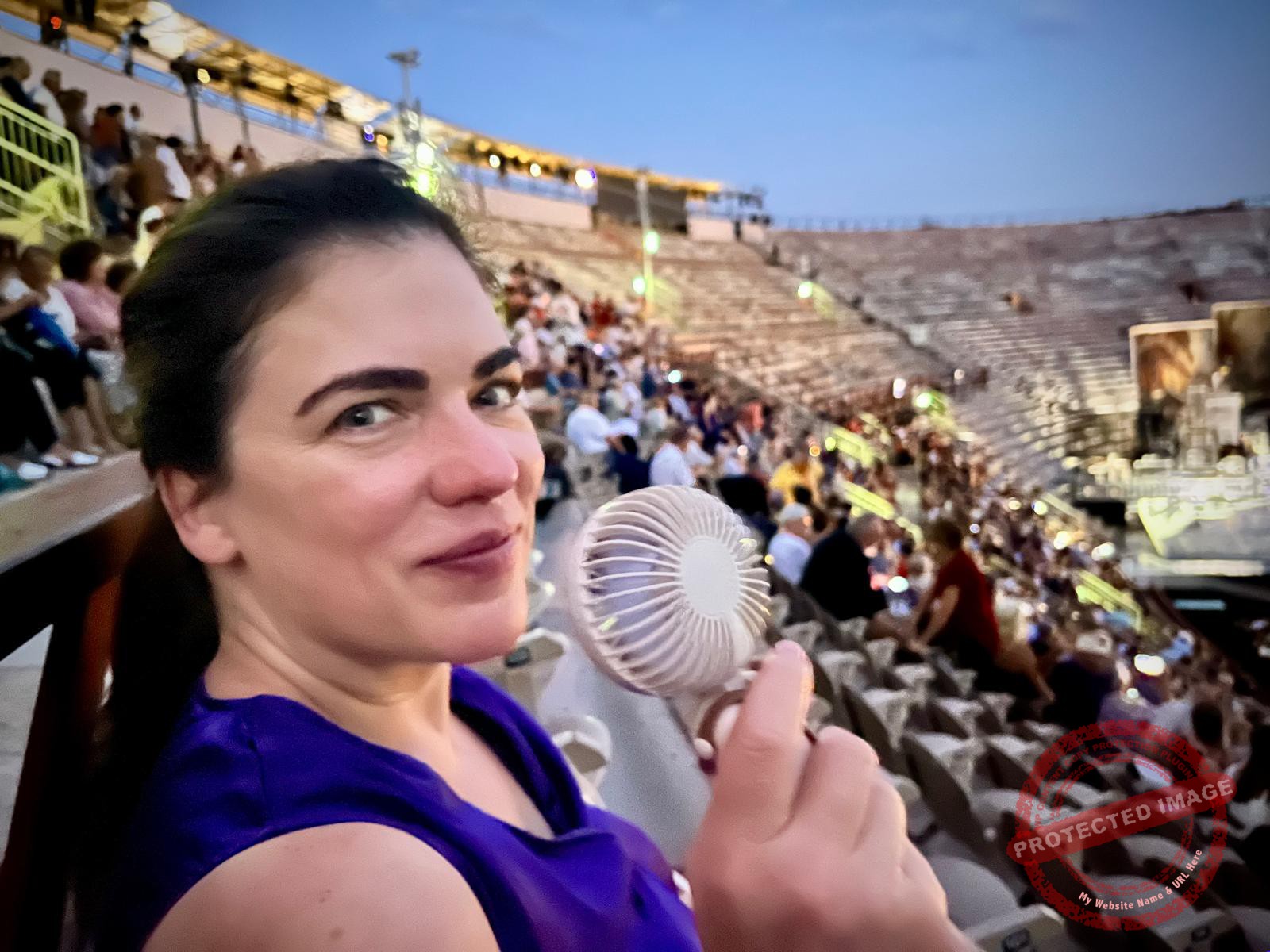
TIP #2-FAN: Bring a fan. Either a beguiling folding hand-fan or a hand-held battery powered, because it is HOT. It does cool down as one approaches midnight, but for those first two hours, you’ll be grateful for your accessory. The nice thing about the old-fashioned folding fan is that you can use it throughout the show, whereas the battery hand-helds really should only be used before the show and during intermissions as they do make a bit of noise.
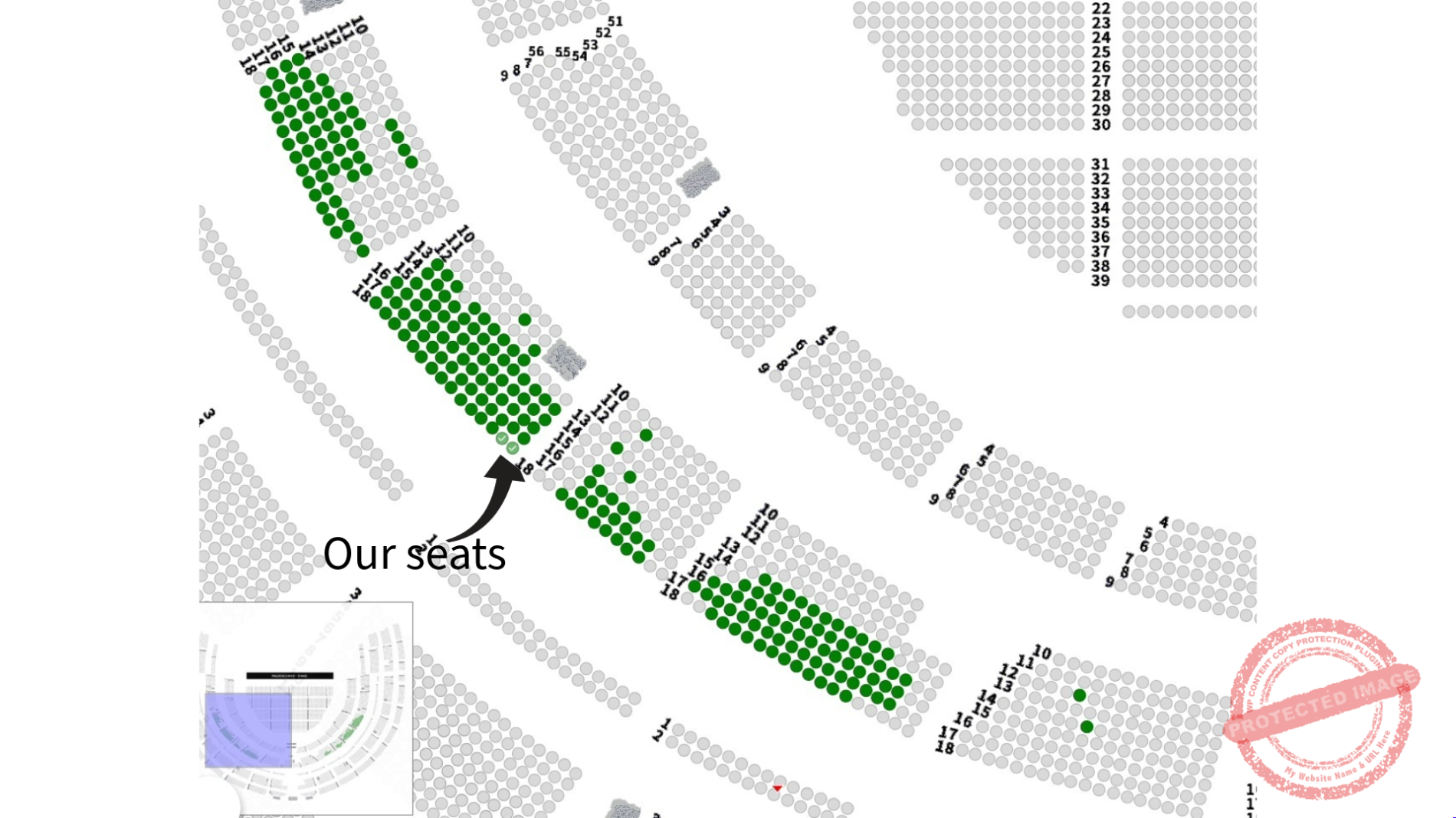
TIP #3-IF ELBOW-ROOM IS A PRIORITY AND TRAVEL ALLOWS, BOOK LAST MINUTE: I booked our tickets for La Boheme the day before the show, and in retrospect, I’m very happy to have done so. Why? Because the seat map for the Arena shows the available seats for purchase, and because it’s the day before the show, you have a much better chance of booking seats that are away from the steaming bodies of others. The downside is, of course, you may have to pay a bit more because cheaper seats are already booked. The other obvious risk is that the show might sell out, and if you’re not living in the area but rather traveling through, waiting last minute might not be a risk worth taking.
That said, when I compare last night’s experience to the one back in 2023 (when I did book in advance), even though Sam and I agree that we thought the 2023 Carmen‘s stage and performance might have been more engaging for us, the actual experience was a hundred times better this time around. I booked seats at the very end of a section and by the isle, so that no one would be sitting directly behind us nor directly to our right. I also chose a row that was completely empty at the time of booking, and the rows in front were also completely empty. When we showed up last night and took our seats, we couldn’t believe our luck. We were the ONLY PEOPLE in our section for several rows, while the areas directly to our right and left were completely packed. It was glorious!
To give you an idea, here is a screenshot I sent to a friend who was contemplating joining us for the show. The dark green shows the seats still available for that section. We were in Section Puccini (“2 Settore Puccini”), which was a bit pricier than I’d wanted, but the next section down (Settore Rossini) was almost entirely booked, and the remaining seats didn’t look like they’d have great visibility. Here’ the screenshot:
TIP #4-CUSHIONS: Cushions make a big difference when you’re sitting on hard, hot plastic (or stone) for three-plus hours. They sell cushions at the arena for a premium, but the ones I saw on offer were all with some sort of rubberized/non-breathable exterior, which in my mind, might make one even sweatier than before. We brought our own cushions that I grabbed from our balcony chairs on the way out of our apartment. Our cushion covers are made of cloth, and I wasn’t even thinking about the importance of that detail until I noticed the plastic-y ones for sale at the arena.
TIP #5-SEATS WITH BACK SUPPORT: For those with even a twinge of back discomfort, I’d highly recommend splurging for an actual seat rather than the less expensive stone steps. Remember: the show goes on for three hours. (Carmen was four.) The stone steps are more of an authentic experience, I suppose, but for both shows we’ve attended so far, the steps are fairly booked up so you can’t count on leaning against the stone wall behind you because, chances are, someone else’s legs are there. If you want/need back support, splurge for a seat.
TIP #6-PICK A SPOT YOU’LL BE HAPPY WITH FOR THE ENTIRETY: Don’t buy a cheaper seat with the plan of upgrading to a free space once the show starts. For the stone steps, there are actually ushers who stand there to ensure folks down try moving to a seat during the show. Even for those people who purchased a more expensive seat in lieu of a stone step, you may or may not get away with shifting to a more open space during the show. We saw a few people who were in the same section as us, but in a more more crowded area. They tried to move to one of the rows in front of where we were sitting. They enjoyed a few blissful moments of freedom, and then an usher came up and told them to move back to their assigned seats. Later on in the show, a few couples moved in tandem to this same area in front of us, and either it was because the show was already at least halfway through or perhaps it was a strength-in-numbers situation, but they were able to enjoy their new seats without a word from the ushers.
TIP #7-DRINKS DURING THE SHOW: Other than the aforementioned small bottle of water, you are not permitted to bring food or drinks into the arena. But fear not. Before the show starts and during intermission, vendors traverse the steps between sections to sell cold water, coke, beer and wine. Many vendors even have popsicles or other types of packaged ice cream. And if you walk outside the arena (but inside the security gates), you’ll likely see a few stalls selling draft beer, wine and snacks. Obviously, there is a price markup for these treats, but when you’re hot and thirsty, it suddenly doesn’t seem like such a bad deal.
TIP #8-DRESS CODE: Most women wear summer dresses or skirts or flowy pants. Sandals are the norm, but do not wear flipflops (thongs). Men typically wear slacks. I saw perhaps six men in knee-length shorts, and while they were not turned away, the stated dress code on the ticket specifically prohibits shorts and flipflops.
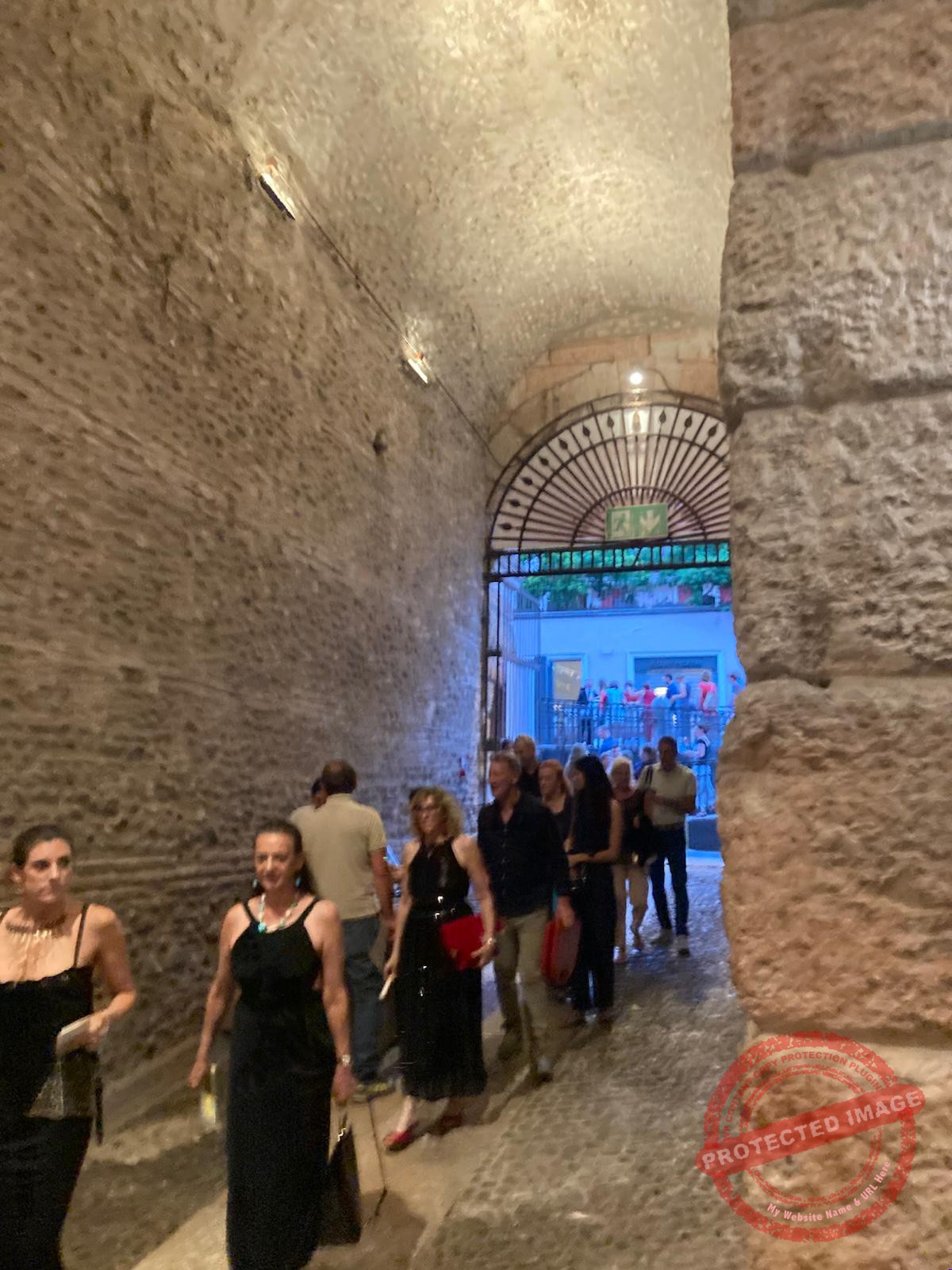
TIP #9-ARRIVAL TIME: The opera always starts at 9:15 in the evening. It is recommended arriving 25 minutes or so before showtime. This is because you must enter the arena through the assigned gate (the gate depends upon your ticket, but the correct gate number will be printed on it–see photo below). Each gate has a queue to go through security, so it takes a while to get from the outside to the inside, then to your assigned seat. If you’re late, you may not be allowed inside once the show has started. Which leads to:
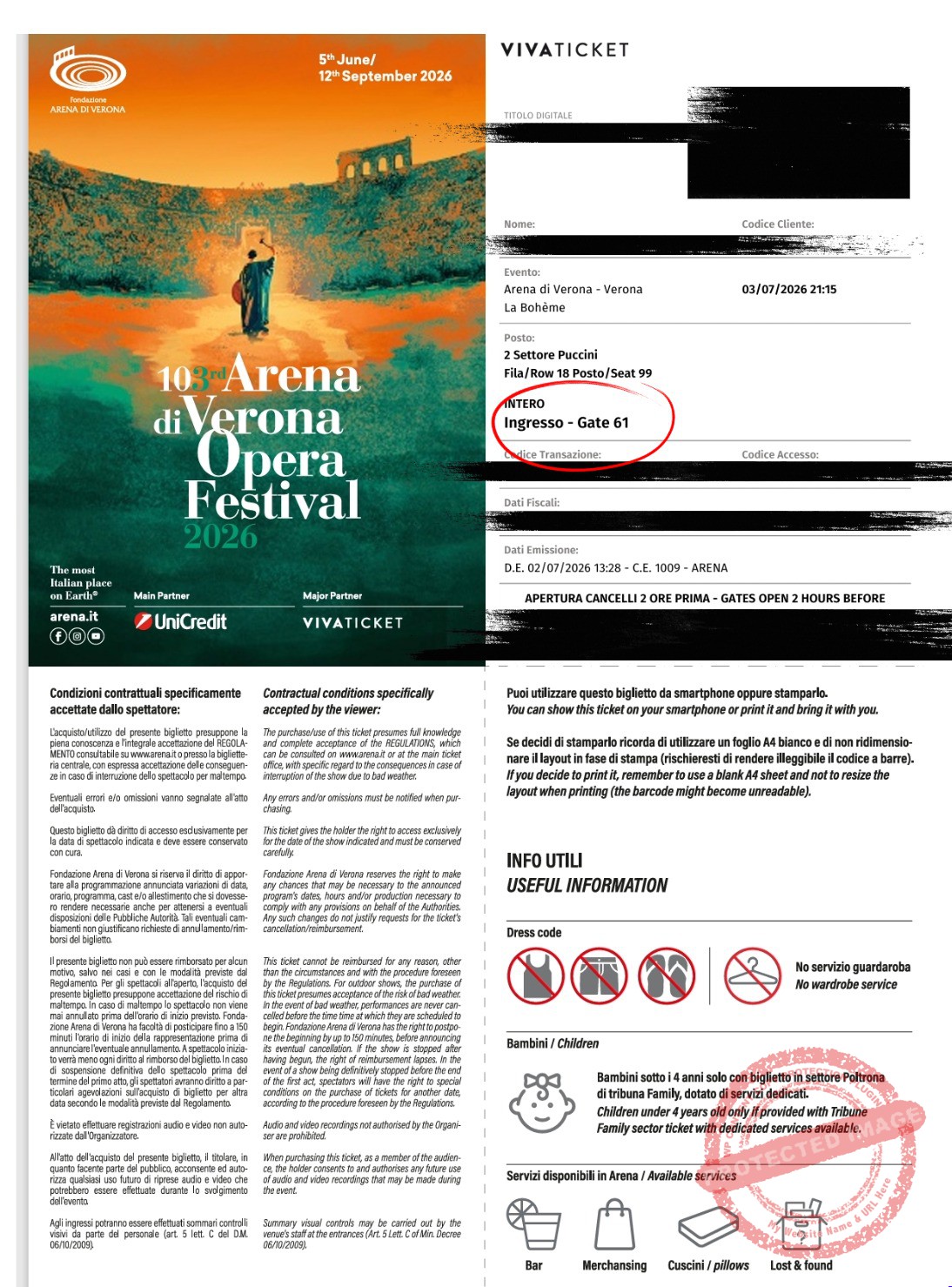
TIP #10-GATES: Your ticket will have the gate number for your entry into the Arena (see photo above). If you think you might be pressed for time due to dinner plans, find your gate ahead of time so that, when you arrive for the show, you’re not wasting time circumnavigating the exterior of the Arena looking for your gate. Each gate has number clearly posted above, so they are fairly easy to find. Once at the gate, you must queue up to go through security.
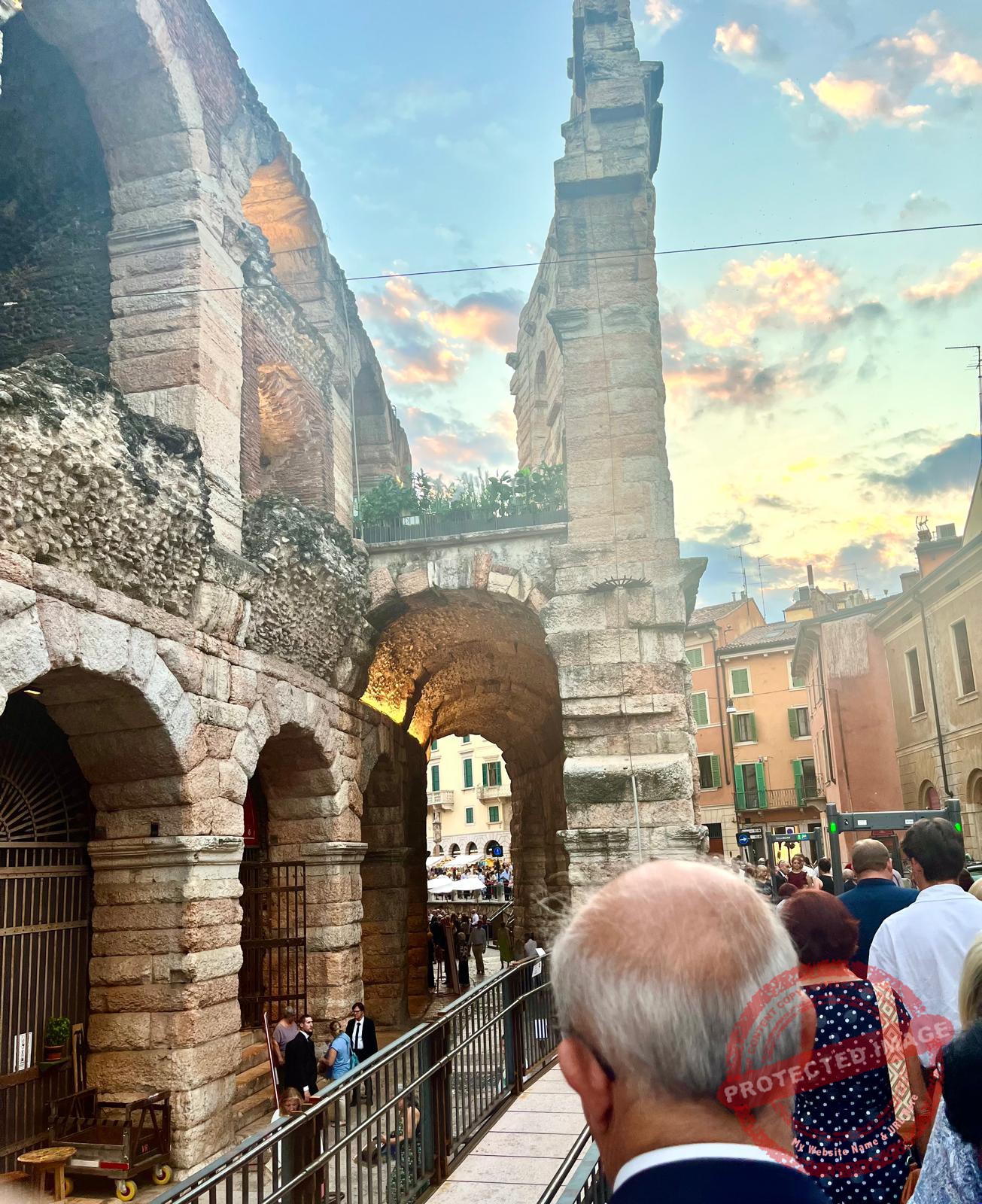
TIP #11-WEATHER: Even though the opera starts at 9:15 pm, it is still daylight out, which means it is still toasty. For those visiting from cooler climes that are used to hot summer days followed by a cooling evening, do not rely upon that misconception here. The summers frequently cook in the low to upper 90’s (mid 32-27 Celsius) during the day, and Verona is a city made of stone. Think of the world’s most beautiful oven. So even when that daylight finally gives way to evening shade, those stones retain a lot of heat. Dress for it.
TIP #12-DINNER!: Almost everyone enjoys a dinner before the show. Remember: it’s three hours long, so even if you aren’t that hungry before the gong resounds at 9:15, by the time you get out, it will be past midnight. A few bars will likely still be open, but if you want a proper sit-down meal, you’d better enjoy it beforehand. For those on a budget, keep in mind that the places near the Arena will naturally be more expensive. If you cross one of the historic bridges across the Adige River, you’ll find less expensive places to eat in the University area.

TIP #13-TRANSLATIONS DURING THE SHOW: The opera is typically in Italian (of course!) but there are large electronic displays showing the lyrics in real time in both Italian and English. Perfetto!
TIP #14-CHAT WITH AN USHER: If you’re in the right spot and opportunity presents itself, say something friendly to the usher nearby. Chances are, they speak a little (or a lot) of English, and you might learn something interesting. For instance, during an intermission, I happened to comment to the usher standing behind me that she must be very warm in her uniform (which was basically a sparkly suit). While I said this in my poor Italian, she at first answered in Italian, then switched to perfect American English as she went on to elaborate that, despite the warmth of her required getup, it was nothing compared to what the performers were having to wear. “Especially for this show, La Boheme, because it takes place in Paris during the winter, so everyone must be bundled up! There is no cooling system down there, either, nor for the orchestra.”
She shared that she actually worked as an extra on Aida years ago, and that is is more or less a right of passage for locals to do so. “Most young people here who work in the city have probably been an extra on an opera or two,” she said.
So, there you go. Chat with an usher!
I hope this helps! Did I forget to mention something? Let me know in the comments. :) I’ll do my best to answer what I can.